Top Mistakes to Avoid When Installing ADA Parking Signs
Ensuring compliance with the Americans with Disabilities Act (ADA) is not just a matter of ethics—it's the law. One of the most commonly overlooked aspects of accessibility compliance is proper ADA sign installation in parking lots. Business owners and property managers often assume it's as simple as planting a sign near a designated space, but there’s more to it. Improper installation can result in hefty fines, lawsuits, or worse—barriers for people with disabilities.
In this guide, we'll walk you through the top ADA sign mistakes property owners make and how to correct them, ensuring your facility is both compliant and accessible. We’ll also provide expert insight into ADA sign guidelines, practical examples, and actionable tips to help you avoid costly errors.
Table of Contents
Key Takeaways
Understanding ADA Significance
Common ADA Sign Installation Mistakes
- Sign Height Errors
- Incorrect Sign Placement
- Faded or Illegible Signs
- Missing Van-Accessible Signage
- Non-Compliant Design and Wording
ADA Sign Guidelines You Must Follow
How to Ensure Proper ADA Compliance
Expert Tips from the Field
Conclusion: Partner with KC Parking Lot Striping
Key Takeaways
- Proper ADA sign installation is crucial for accessibility and legal compliance.
- Common mistakes include improper height, poor placement, and non-compliant signage design.
- Following ADA sign guidelines helps protect your business from fines and lawsuits.
- Partnering with experienced professionals like KC Parking Lot Striping ensures peace of mind.
Understanding ADA Significance
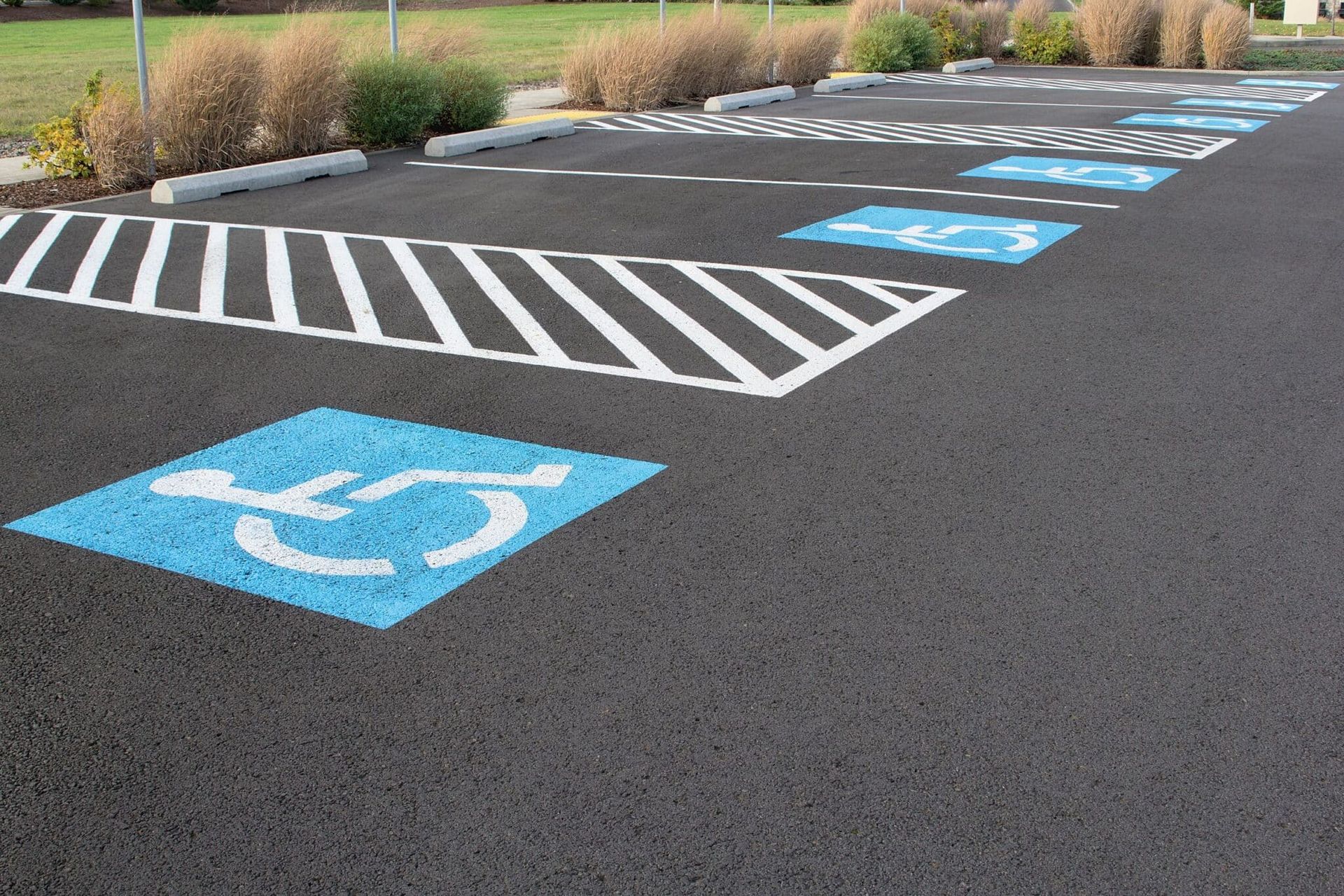
The Americans with Disabilities Act (ADA) is designed to protect the rights of individuals with disabilities by ensuring they have the same access and opportunities as everyone else. One of the key aspects of this is parking accessibility. Properly installed ADA parking signs communicate essential information, identify accessible parking spaces, and create an inclusive environment for all visitors.
But when these signs are incorrectly installed—or worse, missing—it leads to confusion, frustration, and non-compliance. To prevent this, it's essential to understand what constitutes proper ADA sign installation.
Common ADA Sign Installation Mistakes
Let’s break down some of the most frequent ADA sign mistakes we see in the field. Recognizing these will help you avoid unnecessary issues down the line.
Sign Height Errors
ADA sign guidelines require signs to be mounted at least 60 inches above the ground surface to the bottom of the sign. This ensures visibility over parked vehicles.
- Common mistake: Installing the sign too low, making it hard to see, especially when a van or SUV is parked in the space.
- Solution: Use a measuring tape and verify the exact height before drilling or mounting. For sloped surfaces, measure from the base elevation of the parking stall.
Incorrect Sign Placement
Signs must be placed in front of the parking space, not on the side, curb, or wall. Additionally, they should not obstruct pedestrian pathways.
- Common mistake: Mounting signs on building walls, fences, or poles that are not aligned with the parking space.
- Solution: Install signage on a sturdy post at the head of the designated space, ideally centered, for maximum visibility and compliance.
Faded or Illegible Signs
Sunlight, rain, and general wear can quickly degrade signage. Faded signs may no longer meet contrast or visibility standards, making them ineffective.
- Common mistake: Using cheap materials or neglecting regular inspections and maintenance.
- Solution: Choose weather-resistant materials and schedule annual inspections to replace worn signs before they become a problem.
Missing Van-Accessible Signage
The ADA requires one of every six accessible spaces (minimum) to be van-accessible. These spaces require additional width and specific van-accessible signs with designated wording and symbols.
- Common mistake: Marking a wider space as accessible but failing to include the “Van Accessible” designation on the sign.
- Solution: Clearly differentiate van-accessible spaces with the correct sign wording and appropriate dimensions.
Non-Compliant Design and Wording
The ADA outlines exact language and symbols for signage, including the International Symbol of Accessibility (ISA). Fonts, size, and contrast also play a role.
- Common mistake: Custom-designed signs that lack standardized visuals, text size, or contrast.
- Solution: Always source signs from ADA-compliant manufacturers and ensure the design meets all ADA sign guidelines.
ADA Sign Guidelines You Must Follow
If you’re serious about getting it right, here are the key
ADA sign guidelines to remember:
| Guideline | Requirement |
|---|---|
| Mounting Height | Bottom of the sign must be 60 inches minimum from ground |
| Wording | Must include “Reserved Parking” and use the ISA (International Symbol of Accessibility) |
| Material | Weather-resistant, reflective if possible |
| Van Spaces | Must include the phrase “Van Accessible” |
When in doubt, consult with an expert or refer to the 2010 ADA Standards for Accessible Design.
How to Ensure Proper ADA Compliance
If you want your business or facility to remain compliant and welcoming, here are some best practices:
1. Conduct a Signage Audit
Walk your property with a checklist and confirm every accessible space has a properly mounted, visible, and legible ADA sign.
2. Use Verified Contractors
Hire a reputable professional with a track record of ADA sign installation to handle your project. This reduces the chance of errors and ensures accountability.
3. Document Everything
Keep records of when signs were installed, materials used, and any maintenance performed. If your property is ever audited or subject to a complaint, this documentation will be invaluable.
Expert Tips from the Field
At KC Parking Lot Striping, we’ve worked with hundreds of commercial properties, medical facilities, schools, and municipalities to ensure their ADA parking signage is compliant. Here are some tips we’ve picked up over the years:
- Avoid temporary signs like cones or sandwich boards—they are not compliant and can be knocked over easily.
- Check local ordinances: While the ADA provides federal standards, local governments may have stricter rules.
- Integrate lighting if your parking lot operates after dark. Signs should be clearly visible day or night.
- Don’t forget striping: Signage must match pavement markings. An ADA sign without a matching space stencil is a compliance gap.
Partner with KC Parking Lot Striping
Avoiding ADA sign mistakes isn’t just about ticking a compliance box—it’s about ensuring your space is safe, accessible, and welcoming to all visitors. From accurate ADA sign installation to ongoing maintenance and upgrades, we at KC Parking Lot Striping are here to help.
Our team understands the complexities of ADA sign guidelines and applies years of experience to deliver fully compliant, clearly visible signage that protects your business and enhances accessibility.
Contact us today at (816) 439-8103 to schedule a consultation or request a quote.
Don’t wait until you receive a complaint or inspection notice—be proactive, get it right the first time, and let us handle the compliance details so you can focus on running your business.
Frequently Asked Questions
1. What are the most common ADA sign mistakes during installation?
Some of the most frequent ADA sign mistakes include mounting signs too low, placing them in non-visible areas, using non-compliant designs, or omitting the "Van Accessible" designation when required. These errors not only reduce accessibility but also violate federal ADA sign guidelines, potentially resulting in fines or legal consequences.
2. How high should an ADA parking sign be installed?
According to ADA sign guidelines, the bottom of the sign must be mounted at a minimum height of 60 inches from the ground to ensure visibility, even when vehicles are parked in the space. Proper ADA sign installation is essential to meet compliance and avoid visibility issues for drivers.
3. Do van-accessible parking spaces require a different ADA sign?
Yes. Van-accessible spaces require a sign that includes both the International Symbol of Accessibility and the wording “Van Accessible.” Failing to use the correct signage is one of the more common ADA sign mistakes, and it can lead to non-compliance penalties.
4. Can I design my own ADA parking signs?
While customization is possible, the design must still comply with official ADA sign guidelines regarding font, symbol usage, color contrast, and dimensions. Improper fonts, poor contrast, or missing icons are often overlooked ADA sign mistakes that can compromise accessibility and legal compliance.
5. Why should I hire a professional for ADA sign installation?
Professional ADA sign installation ensures your signage is correctly placed, mounted at the proper height, and fully compliant with federal and local ADA sign guidelines. This eliminates guesswork, prevents costly ADA sign mistakes, and helps you avoid fines or lawsuits related to non-compliance.
Related Posts